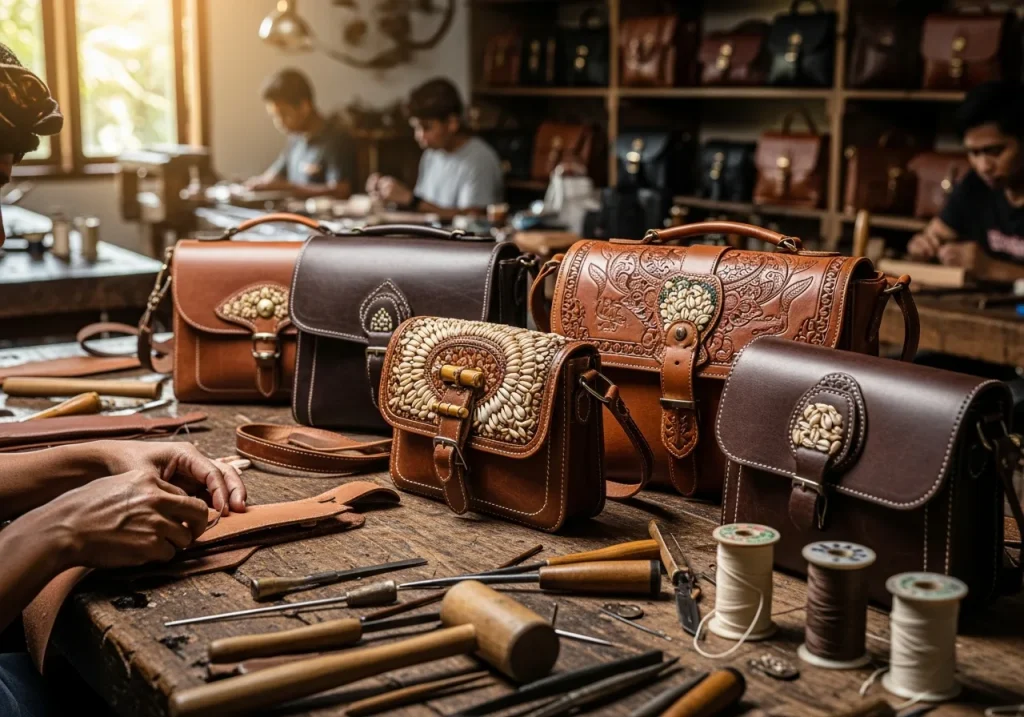
The Bali leather bags wholesale segment operates within a robust Asia-Pacific leather goods and handbag market, experiencing a 5–7% CAGR through 2033–2035. Bali serves as a niche production and sourcing hub for tourism, small brands, and online retailers, supported by increasing global demand and regional growth.
Bali Leather Bags Wholesale Buyer Guide 2027: How to Source Quality Leather at Wholesale Prices
At Bali Leather Bags Wholesale, we provide this guide for importers, wholesalers, retailers, interior contractors, and trade buyers. This briefing focuses on sourcing quality leather products from Bali at wholesale prices, drawing on current market data and practical implications for 2026–2027.
1. Market Size & Growth (Indonesia/Bali Context)
While specific figures for “Bali leather bags wholesale” are not separately published, this segment is an identifiable part of larger, expanding markets:
- Global Leather Bags Market: Valued at USD 73.12 billion in 2024, projected to reach USD 76.77 billion in 2025, and USD 113.45 billion by 2033. This represents an approximate 5% Compound Annual Growth Rate (CAGR) from 2025–2033.
- Global Leather Goods Market: Valued at USD 531.07 billion in 2025, expected to reach USD 566.23 billion in 2026, and USD 982.42 billion by 2034. This indicates a 7.13% CAGR from 2026–2034.
- Global Handbag Market: Valued at USD 86.88 billion in 2025, forecast to reach USD 92.31 billion in 2026, and USD 146.02 billion in 2033. This reflects a 6.8% CAGR from 2026–2033. The Asia-Pacific region accounts for 38.5% of global handbag revenue in 2025, with a forecast growth of 7.8% CAGR from 2026–2033.
Within the Asia-Pacific region, leather goods revenue was USD 117.8 billion in 2025, projected to reach USD 126.64 billion in 2026. Indonesia’s specific share is not disaggregated, but as a significant manufacturing and tourism hub in the region, it contributes to this growth alongside other countries such as China, Vietnam, and India.
Practical Implication for Bali Wholesale (2026–2027):
Demand for Bali leather bags wholesale is supported by rising global consumption of leather goods and handbags, showing mid-single to high-single-digit CAGRs. Strong Asia-Pacific growth and travel-driven retail in destinations like Bali further bolster this demand. Bali’s wholesale leather bag sector remains niche but shows growth, driven by small and medium global brands sourcing from artisan workshops, export orders placed through online channels and social media, and tourist-driven “semi-wholesale” purchases by small resellers.
2027 Note on Sourcing Trends:
For 2027, buyers should observe a continued emphasis on ethical sourcing and transparent supply chains. Suppliers capable of providing verifiable information on leather origins and production practices will gain preference. This includes details on tanning processes and labour conditions, aligning with evolving consumer and regulatory expectations in key import markets.
2. Types of Leather Products Available in Bali
Bali’s leather workshops produce a range of products, often combining traditional craftsmanship with contemporary designs. Common wholesale products include:
- Handbags: Totes, shoulder bags, cross-body bags, clutches, and satchels.
- Wallets & Purses: Various sizes and designs for men and women.
- Accessories: Belts, keychains, and small leather goods.
- Travel Goods: Duffel bags and travel wallets.
- Custom Designs: Many workshops offer OEM/ODM services for specific buyer requirements.
Materials commonly used include cowhide, goatskin, and sheepskin, often sourced regionally. Exotic leathers, when available, are subject to CITES regulations and require appropriate documentation for export.
3. Sourcing Channels & Supplier Vetting
Buyers have several avenues for sourcing Bali handmade leather bags wholesale:
- Direct from Workshops: Engaging directly with local workshops offers direct communication and potential for customisation. This requires on-site visits or established relationships.
- Export Houses/Agents: B2B export houses like Bali Leather Bags Wholesale consolidate products from multiple artisans, manage quality control, and handle export logistics. This simplifies the sourcing process for international buyers.
- Online Platforms: B2B marketplaces and direct supplier websites are increasingly used for initial contact and order placement.
- Trade Fairs: While Bali does not host major international leather goods trade fairs, Indonesian craft and export exhibitions, or regional Asian fairs, can feature Bali-based suppliers.
Key Considerations for Supplier Vetting:
| Factor | Details |
|---|---|
| Production Capacity | Can the supplier meet your order volume and timelines? |
| Quality Control | What are their internal QC processes? Request samples. |
| Material Sourcing | Transparency on leather origin and tanning methods. |
| Customisation | Ability to produce according to your design specifications. |
| Export Experience | Familiarity with international shipping, documentation, and regulations. |
| Communication | Clear and timely communication in English. |
| Payment Terms | Standard terms typically involve a deposit and balance upon shipment. |
4. Quality Standards & Assurance
Ensuring quality in wholesale leather bags from Bali requires a structured approach:
- Leather Grade: Understand the different grades of leather (e.g., full-grain, top-grain, corrected-grain) and specify your requirements. Full-grain leather offers durability and develops a patina over time.
- Hardware Quality: Examine zips, buckles, and clasps. These should be robust, made from durable metals, and function smoothly. YKK zippers are a common benchmark for quality.
- Stitching: Inspect stitching for consistency, strength, and neatness. Double stitching or reinforced stitching at stress points indicates better durability.
- Lining: Check the lining material and its attachment. A durable lining, such as cotton twill or suede, and secure stitching are important for product longevity.
- Finishing: Assess the overall finish, including edge painting, burnishing, and any embellishments. Consistency and attention to detail are indicators of craftsmanship.
For large orders, consider independent third-party quality inspections at various stages of production (pre-production, in-line, pre-shipment).
5. Pricing & Payment Terms
Wholesale pricing for Bali leather bags is influenced by several factors:
- Material Costs: Type and grade of leather, hardware, and lining.
- Labour Costs: Complexity of design and craftsmanship required.
- Order Volume: Larger orders often command lower per-unit prices due to economies of scale.
- Design Complexity: Intricate designs require more labour and may increase costs.
- Customisation: Bespoke designs or branding additions will affect pricing.
Typical Payment Terms:
Common arrangements include a 30–50% upfront deposit to initiate production, with the remaining balance due upon completion or before shipment. Letter of Credit (L/C) may be an option for larger, established buyers. Always clarify currency, payment methods (e.g., bank transfer), and any associated fees.
6. Logistics & Export Documentation
Exporting from Bali requires attention to logistics and documentation:
- Shipping Methods:
- Air Freight: Faster, suitable for smaller, urgent orders. Higher cost per unit.
- Sea Freight: Cost-effective for larger volumes, but with longer transit times. Less than Container Load (LCL) or Full Container Load (FCL) options are available.
- Incoterms: Clearly define Incoterms (e.g., FOB, CIF, EXW) with your supplier to specify responsibilities for costs and risks during shipping.
- Documentation: Essential export documents include:
- Commercial Invoice
- Packing List
- Bill of Lading (for sea freight) or Air Waybill (for air freight)
- Certificate of Origin
- Fumigation Certificate (for wooden packaging, if applicable)
- CITES Permits (for exotic leathers, if applicable)
Working with an experienced export house simplifies this process, as they manage customs clearance, freight forwarding, and documentation compliance.
7. Building Long-Term Relationships
Establishing enduring relationships with Bali suppliers yields benefits for consistent quality and reliable supply. Regular communication, clear specifications, and fair dealing foster trust. Feedback on product performance and market trends can also assist suppliers in improving their offerings, leading to a mutually beneficial partnership.
Sourcing Bali handmade leather bags wholesale requires diligence in market understanding, supplier selection, and quality assurance. By focusing on these areas, importers, wholesalers, retailers, and trade buyers can secure quality products at competitive prices, leveraging Bali’s artisan capabilities for their businesses. For specific wholesale inquiries, request a wholesale quote on WhatsApp.