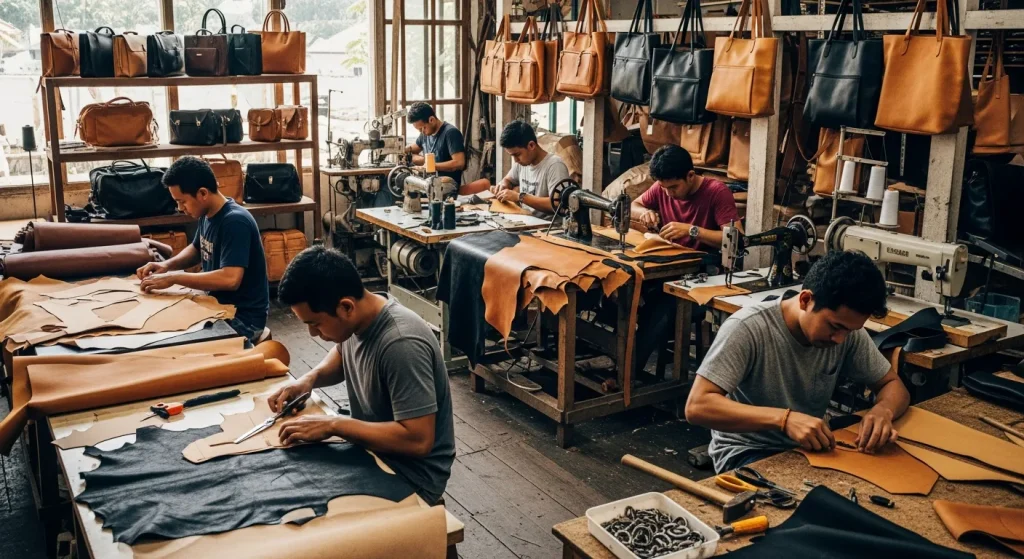
The Bali leather bags wholesale sector is a niche within the global leather goods and handbag market, which is experiencing a 5–7% CAGR through 2033–2035. Bali serves as a production and sourcing hub for small brands, online retailers, and tourism-driven retail, contributing to Asia-Pacific’s 7.8% CAGR in handbag revenue.
Buyer Guide: How to Verify Supplier Credibility for Bali Leather Bag Wholesale Orders
Verifying supplier credibility is fundamental for importers, wholesalers, retailers, and interior contractors when sourcing private label leather bags from Bali. The global leather bags market, valued at USD 73.12 billion in 2024, is projected to reach USD 113.45 billion by 2033, growing at approximately 5% CAGR. Similarly, the global leather goods market, valued at USD 531.07 billion in 2025, is forecast to reach USD 982.42 billion by 2034, with a 7.13% CAGR. The global handbag market also shows robust growth, from USD 86.88 billion in 2025 to USD 146.02 billion in 2033, at a 6.8% CAGR. Asia-Pacific accounts for 38.5% of global handbag revenue in 2025 and is expected to grow at 7.8% CAGR. Bali’s wholesale leather bag sector, while niche, benefits from these trends, driven by small and medium global brands, online export orders, and tourist-driven bulk purchases. This guide outlines practical steps for assessing potential suppliers in this growing market segment.
1. Initial Due Diligence and Background Checks
Before engaging with any Bali leather bag wholesaler, comprehensive background checks are essential. This initial phase helps establish a baseline understanding of the supplier’s operational history and market standing.
Verify Business Registration
- Local Registration: Confirm the supplier is legally registered in Indonesia. Request copies of their business registration documents, such as a Nomor Induk Berusaha (NIB) or Surat Izin Usaha Perdagangan (SIUP). These documents confirm their legal right to operate and export.
- Export Licences: Ensure the supplier possesses the necessary export licences for leather goods. This prevents complications during customs clearance and international shipping.
Online Presence and Reputation
- Website and Social Media: Evaluate the professionalism and consistency of their website and social media profiles. Look for clear product descriptions, contact information, and evidence of active engagement. A well-maintained online presence often indicates a serious business.
- Online Reviews and Testimonials: Search for independent reviews on platforms like Google Business, industry forums, or B2B marketplaces. While not always definitive, consistent positive or negative feedback can be indicative.
- Industry Associations: Check if the supplier is a member of any relevant industry associations in Indonesia or internationally. Membership can suggest adherence to certain standards and ethical practices.
2. Communication and Transparency Assessment
Effective and transparent communication is a hallmark of a credible supplier. Evaluate how potential partners interact during initial inquiries.
Responsiveness and Clarity
- Response Times: Assess how quickly and thoroughly they respond to emails or messages. Delays or vague answers can be red flags.
- Language Proficiency: Given the international nature of B2B trade, evaluate their proficiency in English or your preferred communication language. Misunderstandings due to language barriers can lead to costly errors.
- Information Provision: A reliable supplier provides clear, detailed information regarding product specifications, materials, minimum order quantities (MOQs), production lead times, and payment terms without prompting.
Transparency in Operations
- Factory or Workshop Visits: If feasible, arrange a visit to their workshop or factory in Bali. This provides direct insight into their production capabilities, quality control processes, and working conditions.
- Sample Orders: Always request samples before placing a large wholesale order. Evaluate the sample for material quality, craftsmanship, adherence to specifications, and packaging. This is a direct test of their production capabilities.
3. Financial Stability and Payment Terms
Understanding a supplier’s financial stability and their proposed payment terms is crucial for mitigating financial risk.
Payment Terms and Security
- Standard Terms: Be cautious of suppliers demanding 100% upfront payment, especially for new relationships or large orders. Standard B2B payment terms often involve a deposit (e.g., 30-50%) upfront and the balance upon completion or shipment.
- Secure Payment Methods: Insist on secure payment methods such as bank transfers, letters of credit (LCs), or established B2B payment platforms. Avoid methods that offer no buyer protection.
- Invoicing: Ensure all transactions are accompanied by professional, detailed invoices that clearly state the supplier’s business details, product descriptions, quantities, prices, and terms.
Financial References (If Applicable)
For very large orders or long-term partnerships, you may request financial references from their bank or other business partners, although this is less common for initial smaller wholesale orders in Bali.
4. Quality Control and Production Capabilities
A supplier’s ability to consistently deliver high-quality products according to specifications is paramount.
Production Capacity and Lead Times
- Realistic Promises: Evaluate if their stated production capacity aligns with your order volume and desired lead times. Unrealistic promises can indicate potential delays or quality compromises.
- Production Process: Ask about their production process, from material sourcing to finishing. Understand how they manage quality at each stage.
Material Sourcing
- Leather Origin: Inquire about the origin and type of leather used. Reliable suppliers will be transparent about their material sources and can provide certifications if applicable (e.g., for ethically sourced leather).
- Hardware and Components: Discuss the quality of hardware (zippers, buckles, clasps) and other components. These details significantly impact the final product’s durability and appeal.
Quality Assurance Procedures
- Inspection Protocols: Ask about their internal quality control (QC) procedures. Do they have dedicated QC staff? How do they handle defects?
- Third-Party Inspections: For larger orders, consider arranging independent third-party inspections at various stages of production (pre-production, during production, pre-shipment).
5. Logistics and Export Experience
A credible Bali leather bag wholesaler will have established processes for international shipping and export.
Shipping and Packaging
- Packaging Standards: Discuss their packaging methods to ensure products are adequately protected during transit, especially for delicate leather items.
- Shipping Options: Inquire about their experience with different shipping methods (air freight, sea freight) and their preferred logistics partners. They should be able to advise on costs and transit times.
Customs and Documentation
- Export Documentation: A knowledgeable supplier will be familiar with all necessary export documentation, including commercial invoices, packing lists, certificates of origin, and any specific declarations required for leather goods.
- Customs Clearance: Understand their role and your responsibilities regarding customs clearance in both Indonesia and your destination country.
2027 Note
By 2027, with the Asia-Pacific handbag market forecast to grow at a 7.8% CAGR, buyers should expect increased sophistication in Bali’s wholesale leather bag sector. Suppliers will likely offer more robust digital catalogues, virtual factory tours, and enhanced transparency regarding material traceability. Buyers should prioritise suppliers who are actively investing in these areas to streamline sourcing and ensure product authenticity and ethical production.
6. Contracts and Agreements
Formal contracts protect both buyer and seller and clarify expectations.
Written Agreements
- Detailed Contracts: Always insist on a written contract that clearly outlines all terms and conditions, including product specifications, quantities, prices, payment schedule, delivery timelines, quality standards, intellectual property rights (especially for private label leather bags bali designs), and dispute resolution mechanisms.
- Dispute Resolution: Understand the legal framework for dispute resolution. This typically involves mediation or arbitration under Indonesian law, or as specified in the contract.
| Verification Step | Key Action | Expected Outcome |
|---|---|---|
| Business Registration | Request NIB/SIUP & export licences | Legal operation confirmation |
| Online Presence | Review website, social media, independent reviews | Indication of professionalism & reputation |
| Communication | Assess response times, clarity, language skills | Transparent and effective interaction |
| Sample Order | Order and inspect product sample | Direct validation of quality & craftsmanship |
| Payment Terms | Negotiate secure terms (e.g., deposit, balance on shipment) | Mitigation of financial risk |
| Quality Control | Inquire about QC process, material sourcing | Assurance of consistent product standards |
| Logistics | Discuss shipping, packaging, export documentation | Smooth international delivery |
| Contracts | Insist on detailed written agreement | Legal protection & clear expectations |
By systematically applying these verification steps, buyers can confidently identify credible Bali leather bag wholesale suppliers. This approach minimises risks, ensures product quality, and fosters long-term, productive partnerships in the dynamic global leather goods market.
For further assistance or to discuss your private label leather bags bali requirements, request a wholesale quote on WhatsApp.