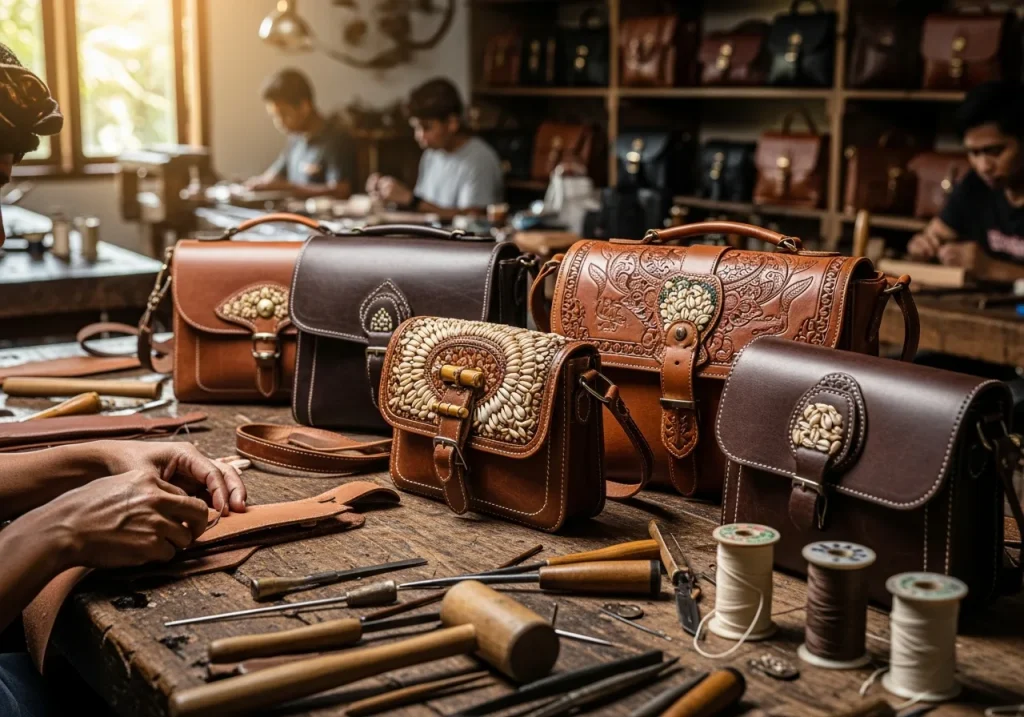
The global leather bags market, valued at USD 73.12 billion in 2024, is projected to reach USD 113.45 billion by 2033, growing at a ~5% CAGR. Bali’s leather bags wholesale segment, while niche, benefits from this expansion, serving small brands, online retailers, and tourism-driven demand within the broader Asia-Pacific leather goods market.
Buyer Guide: What to Look for in Leather Quality, Durability, and Craftsmanship When Buying Wholesale Bali Bags
As Komang Aditya, founder of a leather workshop and Senior Content Lead for Bali Leather Bags Wholesale, I understand the considerations for importers, wholesalers, retailers, interior contractors, and trade buyers. This guide details essential criteria for evaluating leather quality, durability, and craftsmanship when sourcing handmade genuine leather bags wholesale in Bali.
Understanding the Market Context for Bali Leather Bags Wholesale
The Asia-Pacific region is a significant driver in the global leather goods and handbag market. The global leather bags market was valued at USD 73.12 billion in 2024, expecting to reach USD 76.77 billion in 2025 and USD 113.45 billion by 2033, demonstrating approximately 5% CAGR (2025–2033). Similarly, the global leather goods market, valued at USD 531.07 billion in 2025, is projected to reach USD 982.42 billion by 2034, with a 7.13% CAGR (2026–2034). The global handbag market also shows robust growth, from USD 86.88 billion in 2025 to USD 146.02 billion in 2033, at a 6.8% CAGR (2026–2033). Asia-Pacific accounts for 38.5% of global handbag revenue in 2025 and is forecast to grow at 7.8% CAGR (2026–2033).
Within this expanding market, Bali’s wholesale leather bag sector is niche but growing. It is supported by rising global consumption and strong Asia-Pacific growth, particularly from travel-driven retail. This demand stems from small and medium global brands sourcing from artisan workshops, export orders via online channels, and tourist-driven ‘semi-wholesale’ purchases by smaller resellers.
2027 note: By 2027, with the global handbag market projected to reach USD 98.05 billion and the global leather goods market at USD 606.59 billion, buyers should anticipate continued steady demand for artisanal, handmade products from regions like Bali, supporting consistent wholesale opportunities.
Evaluating Leather Quality
The quality of leather is fundamental to a bag’s appeal and longevity. When buying handmade genuine leather bags wholesale in Bali, focus on these characteristics:
1. Type of Leather
Different leather types offer distinct properties:
- Full-Grain Leather: This is the highest quality leather, retaining the natural grain and imperfections. It is durable, develops a rich patina over time, and is resistant to moisture.
- Top-Grain Leather: The second-highest grade, where the outermost layer is sanded off to remove imperfections, then treated. It is still durable but less breathable than full-grain.
- Split Leather: Made from the lower layers of the hide after the top-grain is separated. It is less durable and often used for suede or embossed leathers.
- Bonded Leather: Composed of leather scraps bonded together with polyurethane or latex. It is the lowest quality and least durable.
For wholesale Bali bags, full-grain and top-grain leathers offer the best balance of quality and durability, providing value to your customers.
2. Tanning Process
The tanning process significantly impacts the leather’s characteristics:
- Vegetable-Tanned: Uses natural tannins from bark and other plant matter. This process is time-consuming but results in stiff, durable leather that ages well and is environmentally friendlier.
- Chrome-Tanned: Uses chromium sulphates. This is a faster process, yielding softer, more pliable, and water-resistant leather. Most leather bags are chrome-tanned due to its efficiency and versatility.
Understanding the tanning method helps assess the leather’s expected feel, stiffness, and how it will age.
3. Finish and Colour Consistency
Examine the leather’s finish for uniformity. High-quality leather will have a consistent colour application without streaks or blotches. The finish should feel smooth and natural, not overly plastic-like. Some natural variations in grain are expected with genuine leather, especially full-grain, but the overall presentation should be cohesive.
Assessing Durability
Durability ensures customer satisfaction and reduces returns. Consider these factors:
1. Leather Thickness and Suppleness
Thicker leather generally indicates greater durability. However, it should not be overly rigid unless the design demands it. A good quality bag will strike a balance between thickness for structural integrity and suppleness for comfortable use. The leather should feel robust but pliable.
2. Hardware Quality
Hardware, such as zippers, buckles, D-rings, and clasps, is critical for a bag’s longevity. Poor quality hardware can fail quickly, rendering an otherwise good bag unusable. Look for:
- Solid Metal: Brass, stainless steel, or sturdy alloys are preferred over plated plastic or thin, easily bent metals.
- Smooth Functionality: Zippers should glide smoothly without snagging. Buckles and clasps should operate securely.
- Finish: Consistent plating or finish without chips or tarnishing.
3. Lining Material
The interior lining protects the bag’s contents and structure. A durable lining, often cotton canvas, twill, or a strong synthetic, will withstand daily use without tearing or fraying. Inspect seams and attachment points of the lining to the leather exterior.
Examining Craftsmanship
Handmade genuine leather bags from Bali are distinguished by their craftsmanship. This is where attention to detail becomes paramount.
1. Stitching Quality
Stitching is a primary indicator of craftsmanship and durability. Look for:
- Even Stitches: All stitches should be uniform in length and tension.
- Strong Thread: Thick, durable thread (often nylon or polyester) that matches the leather’s weight.
- Reinforced Stress Points: Areas subject to high stress, like strap attachments and handle bases, should have double stitching or bar tacks for added strength.
- No Loose Threads: A well-made bag will have all threads neatly trimmed and secured.
2. Edge Finishing
The edges of the leather can be finished in several ways, each indicating different levels of care:
- Burnished Edges: Achieved by rubbing and heating the raw edge until it is smooth and sealed. This is a sign of traditional, high-quality craftsmanship.
- Painted Edges: Edges coated with a durable paint. The paint should be smooth, evenly applied, and not peel or crack.
- Folded Edges: Leather edges folded over and stitched. This is a clean, durable finish.
Raw, unfinished edges can be acceptable for certain designs but are generally less durable over time.
3. Strap and Handle Construction
Straps and handles bear the weight of the bag’s contents and must be robustly constructed. Check for:
- Secure Attachment: Firmly stitched or riveted to the bag body.
- Layered or Reinforced: Often, straps are made from multiple layers of leather or reinforced with webbing for strength.
- Comfort: For shoulder or crossbody bags, the strap width and material should be comfortable for extended wear.
Summary of Key Evaluation Points
| Category | Key Aspects to Inspect | Indicator of Quality |
|---|---|---|
| Leather Quality | Type of Leather | Full-grain > Top-grain > Split > Bonded |
| Tanning Process | Vegetable-tanned (stiff, durable, ages well), Chrome-tanned (soft, pliable, water-resistant) | |
| Finish & Colour | Consistent, natural feel, no blotches or plastic sheen | |
| Durability | Leather Thickness | Robust but pliable; appropriate for design |
| Hardware | Solid metal (brass, stainless steel), smooth functionality, consistent finish | |
| Lining Material | Durable fabric (canvas, twill), securely stitched | |
| Craftsmanship | Stitching | Even, uniform, strong thread, reinforced stress points, no loose ends |
| Edge Finishing | Burnished, smoothly painted, or neatly folded edges | |
| Strap/Handle | Securely attached, reinforced, comfortable |
By meticulously evaluating these aspects of leather quality, durability, and craftsmanship, importers, wholesalers, and trade buyers can confidently select handmade genuine leather bags wholesale in Bali that meet their standards and appeal to their discerning customers. This approach ensures you source products that reflect the value and artistry expected from Balinese artisans.
For further enquiries or to discuss your specific wholesale requirements for handmade genuine leather bags, please request a wholesale quote on WhatsApp.