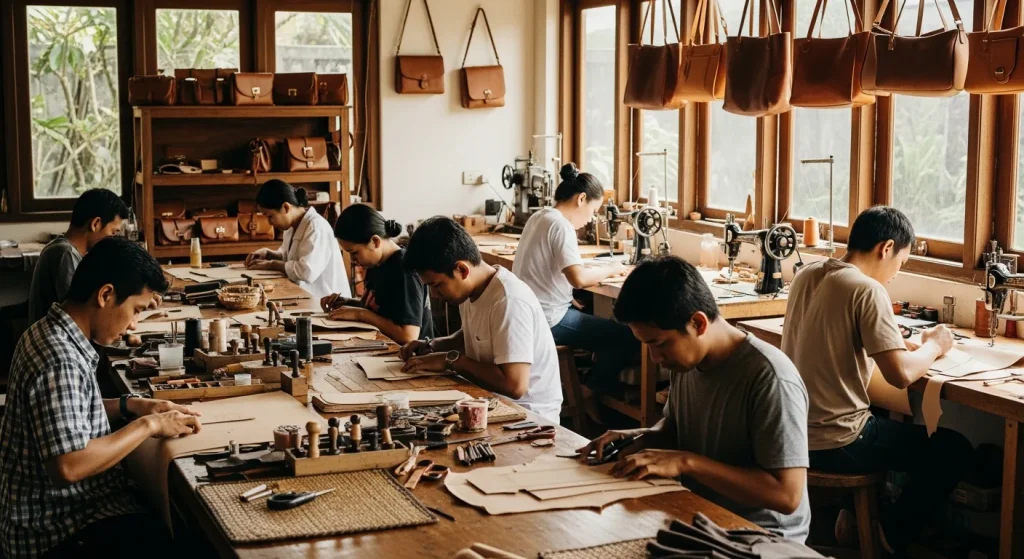
The global leather bags market, valued at USD 73.12 billion in 2024, is projected to reach USD 113.45 billion by 2033, growing at a 5% CAGR. Bali’s leather bag wholesale segment operates within this expanding market, serving small brands, online retailers, and tourism-driven bulk buyers.
Common Sourcing Mistakes When Buying Bali Leather Bags Wholesale in 2027 and How to Fix Them
As Komang Aditya, founder of a leather workshop and Senior Content Lead for Bali Leather Bags Wholesale, I observe recurring issues for international buyers. The global leather goods market, valued at USD 531.07 billion in 2025, is projected to reach USD 982.42 billion by 2034, growing at a 7.13% CAGR. Asia-Pacific contributes significantly, with handbag revenue forecast to grow at a 7.8% CAGR from 2026 to 2033. Bali, while a niche production hub, participates in this expansion, attracting buyers for its artisan-crafted products.
Understanding these market dynamics is crucial for successful sourcing. Bali’s wholesale leather bag sector is driven by small and medium global brands, online export orders, and tourist-driven bulk purchases. This article addresses common sourcing pitfalls and provides actionable solutions for importers, wholesalers, retailers, and interior contractors.
Mistake 1: Underestimating Lead Times and Production Capacity
Many buyers underestimate the lead times required for custom orders or large quantities from Bali. While some suppliers hold stock, bespoke designs or significant volumes demand a structured production schedule. The artisan nature of many Bali workshops means capacity is not always scalable instantly, unlike larger industrial facilities.
How to Fix It:
- Plan Ahead: Factor in a minimum of 6–12 weeks for production, plus shipping time, especially for new designs or substantial orders. This accounts for material sourcing, craftsmanship, quality control, and packing.
- Verify Production Capacity: During initial communication, clearly state your required volume and delivery timeline. Ask for a production schedule breakdown and seek assurances on capacity. Reputable wholesalers will provide this detail.
- Stagger Orders: For ongoing supply, consider placing staggered orders to maintain a consistent inventory flow rather than relying on single, large, infrequent shipments.
Mistake 2: Neglecting Quality Control Standards
Quality variations can arise from different workshops or inconsistent material sourcing. Without clear quality control (QC) parameters, buyers risk receiving goods that do not meet their expectations or market standards.
How to Fix It:
- Define Clear Specifications: Provide detailed specifications for leather type, hardware, stitching, lining, dimensions, and finishing. Include acceptable tolerance levels.
- Request Samples: Always request pre-production samples for approval. This allows for physical inspection and feedback before mass production.
- Implement Mid-Production Checks: For larger orders, arrange for a third-party inspection or request photographic updates during key production stages.
- Final Inspection: Conduct a thorough final inspection before shipment. A reliable Bali wholesaler will facilitate this process or provide detailed QC reports.
Mistake 3: Overlooking Payment Terms and Financial Security
Unclear or unfavourable payment terms can create financial risk. Buyers sometimes fail to negotiate appropriate payment schedules or verify the legitimacy of their suppliers.
How to Fix It:
- Negotiate Clear Payment Terms: Standard practice often involves a 30–50% upfront deposit, with the balance due upon completion or before shipment. Discuss what works best for both parties.
- Use Secure Payment Methods: Utilise bank transfers (TT) or letters of credit (LC) for larger transactions. Avoid informal payment methods for significant orders.
- Verify Supplier Credibility: Request references, check business registration, and if possible, conduct site visits or virtual tours. A legitimate B2B wholesaler will readily provide this information.
Mistake 4: Inadequate Communication and Language Barriers
Misunderstandings due to communication gaps or language differences can lead to errors in production, delays, and frustration. While many Bali suppliers have English-speaking staff, nuances can be lost.
How to Fix It:
- Maintain Clear Written Communication: Confirm all details, specifications, and agreements in writing (email is preferable). This creates a clear record.
- Use Visual Aids: Supplement written instructions with sketches, technical drawings, and reference photos.
- Schedule Regular Updates: Agree on a communication frequency for production updates.
- Work with a Dedicated Account Manager: A professional Bali wholesaler will assign a specific contact person to manage your order, streamlining communication.
Mistake 5: Ignoring Logistics and Shipping Complexities
Shipping from Bali involves international logistics, customs clearance, and potential delays. Neglecting these aspects can result in unexpected costs and extended delivery times.
How to Fix It:
- Understand Incoterms: Clearly define Incoterms (e.g., FOB, CIF, EXW) with your supplier to establish responsibilities for costs and risks during shipping.
- Obtain Shipping Quotes: Get detailed shipping quotes for both air freight (faster, more expensive) and sea freight (slower, more economical) from reputable freight forwarders.
- Factor in Customs and Duties: Research import duties, taxes, and customs regulations for leather goods in your destination country. These can significantly impact final landed costs.
- Insurance: Insure your shipments against loss or damage during transit.
Mistake 6: Failing to Research Ethical Sourcing Practices
In 2027, consumers and businesses increasingly demand ethical and sustainable sourcing. Buyers risk reputational damage if their supply chain is found to be non-compliant with labour or environmental standards.
How to Fix It:
- Inquire About Labour Practices: Ask about working conditions, fair wages, and age verification for employees at the workshops.
- Understand Material Sourcing: Inquire about the origin of the leather and any certifications related to tanning processes or environmental impact.
- Seek Transparency: Partner with suppliers who are open about their production processes and supply chain.
2027 Note: Digital verification tools and blockchain-based supply chain transparency solutions are becoming more accessible. Importers should explore suppliers who are adopting these technologies to provide verifiable provenance and ethical compliance data.
Mistake 7: Not Diversifying Suppliers
Relying solely on one supplier, especially for critical products like wholesale boho leather bags Bali, can pose a significant risk. Disruptions to one workshop can halt your entire supply.
How to Fix It:
- Build Relationships with Multiple Suppliers: Identify and vet a few reliable suppliers who can produce similar quality and styles.
- Place Smaller Orders Initially: Test new suppliers with smaller, manageable orders to assess their reliability, quality, and communication before committing to larger volumes.
- Cross-Train on Designs: If possible, have multiple suppliers familiar with your core product designs to enable flexibility.
Mistake 8: Ignoring Market Trends and Consumer Preferences
The global handbag market is dynamic, with trends evolving rapidly. Failing to keep abreast of these changes can result in stagnant inventory.
How to Fix It:
- Stay Informed: Regularly research fashion forecasts, consumer reports, and competitor offerings.
- Collaborate on Design: Work with your Bali suppliers on new designs that incorporate current trends while retaining the unique artisan aesthetic.
- Test New Products: Introduce new styles in smaller quantities to gauge market reception before committing to large production runs.
Conclusion
Sourcing wholesale boho leather bags from Bali offers significant opportunities, supported by a growing global market and Bali’s unique production capabilities. The global leather bags market is projected to reach USD 113.45 billion by 2033, with Asia-Pacific driving substantial growth. By proactively addressing common sourcing mistakes related to lead times, quality control, payment, communication, logistics, ethics, supplier diversification, and market trends, importers and wholesalers can establish efficient and profitable supply chains. Building strong, transparent relationships with reputable Bali suppliers is paramount for long-term success. For further assistance, request a wholesale quote on WhatsApp.